Reviewing the Happy New Year Glitter T Shirt Design
As a designer who has spent countless hours staring at hoop frames and untangling thread nests, I approach every new machine embroidery design with a mix of optimism and skepticism. We have all been there: downloading a file that looks stunning on a screen, only to find it turns into a puckered mess on fabric. Today, I am taking a close look at the Happy New Year Glitter T Shirt graphic to determine if it holds up in real-world application. This is not just about aesthetics; it is about functionality for those of us running a craft business or creating personalized gifts for loved ones.
First Impressions and Visual Personality
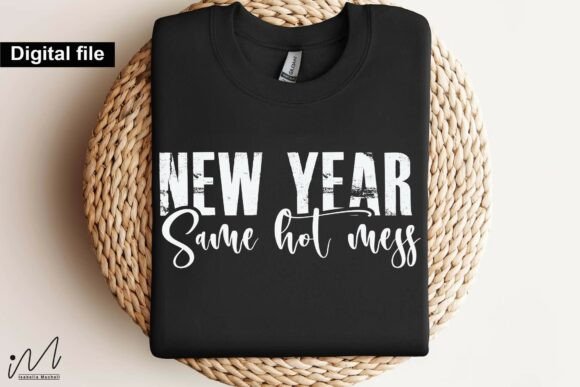
The first thing that strikes me about the Happy New Year Glitter T Shirt concept is its inherent playfulness. The title suggests a festive, high-energy vibe, which is exactly what customers look for during the holiday rush. However, as an experienced reviewer, I know that "glitter" in digital Graphics does not automatically translate to shiny thread. In embroidery, we simulate sparkle through clever use of satin stitch angles and high-contrast thread colors.
The layout appears to be centered around a humorous or celebratory message, likely intended for casual wear. For an Etsy seller, this type of design assets is gold because it taps into the impulse-buy market. The mood is lighthearted, making it perfect for holiday embroidery projects that do not take themselves too seriously. When I visualize this on a garment, I see it working best on relaxed-fit items rather than structured formal wear. It feels like a design meant to bring a smile, which is a powerful tool for building customer trust and engagement.
Real-World Application Scenarios
Let us move beyond the screen and imagine this design stitched out. I recently prepared a batch of custom apparel for a local boutique, and a design like this would fit seamlessly into a sweatshirt embroidery collection. Imagine a heather gray crewneck with this festive motif centered on the chest. The contrast between the soft fleece texture and the crisp lines of the embroidery creates a tactile appeal that photos alone cannot capture.
Beyond apparel, consider the versatility for a tote bag design. Canvas bags are sturdy and handle higher stitch density well. If you are creating a small shop product line for New Year parties, pairing these embroidered totes with matching accessories can increase your average order value. For those focusing on baby embroidery, I would advise caution. While cute, the theme might be more suitable for older children’s clothing or nursery decor items like pillow covers, where the durability requirements are slightly different than for items that undergo frequent washing and rough handling.
Another excellent avenue is the embroidered patch. By stitching this design onto twill or felt and cutting it out, you create a versatile accessory that can be ironed or sewn onto jackets, hats, or backpacks. This extends the life of the finished product and allows customers to customize their own gear, adding a layer of interactivity to your brand.
Technical Considerations for Stitching
Here is where the rubber meets the road. The product description notes that you will receive PNG files with transparent backgrounds at 300 DPI. It is crucial to understand that a PNG is a raster image, not a native embroidery file format like PES or DST. This means you cannot simply load it into your machine. You must use digitizing software to convert this graphic into stitch data.
If you are not a digitizer, this step is critical. You need to ensure that the "glitter" effect is interpreted correctly. A poor conversion might result in excessive fill stitch usage, leading to a stiff, heavy patch that pulls on the fabric. I recommend using a combination of satin stitch for borders and text to keep edges sharp, and careful fill patterns for larger areas to maintain flexibility. Always check the stitch density in your software before hitting start. High density on a thin t-shirt will cause puckering, no matter how good your stabilizer is.
For those using this as a reference for manual digitizing, pay attention to the small details. Tiny lettering can easily get lost if the stitches are too thick. Test the design on scrap fabric first. I always run a test on the same fabric type I intend to sell. If you are working with dark fabric, ensure your thread color contrast is high enough to make the design pop. A black thread on a navy shirt will disappear, ruining the visual impact.
Navigating Fabric and Hoop Constraints
Not every surface is created equal. When applying this design to curved surfaces like caps, you must be mindful of the hoop size and the distortion that occurs on rounded shapes. A large, dense design can warp the front panel of a cap. For hats, I suggest scaling down the design or simplifying the internal details to reduce pull.
Textured fabrics present another challenge. If you are stitching on a waffle-knit towel or a ribbed sweater, the underlying texture can interfere with the stitch definition. In these cases, a cut-away stabilizer is non-negotiable to provide a firm foundation. For stretchy fabrics like jersey t-shirts, ensure you are using a ballpoint needle and appropriate stabilizer to prevent skipped stitches or fabric damage.
Also, consider the washability. Items labeled as custom apparel are expected to last. If the design uses very long satin stitches without proper underlay, they may snag or loosen after a few cycles in the washing machine. Reinforcing key areas with tack-down stitches can improve longevity.
Commercial Viability and Brand Consistency
For the digital embroidery file seller or the handmade producer, consistency is key. Does this Happy New Year Glitter T Shirt design align with your brand? If your shop focuses on minimalist, modern aesthetics, this playful, glitter-themed graphic might feel out of place. However, if your brand is known for fun, vibrant, and seasonal items, it is a perfect fit.
Using this design in your printable mockup previews can significantly boost buyer engagement. Show the design on various products—a mug, a shirt, a tote—to help customers visualize the end result. Remember, you are selling a feeling as much as a product. The humor and festivity embedded in the design should shine through in your marketing materials.
Before listing any commercial embroidery items, double-check the licensing terms. The description mentions it is for crafts projects, but always confirm if commercial use is permitted for the specific file formats provided. Since you are receiving PNGs, you are likely creating the embroidery files yourself or hiring someone to do so. Ensure you have the rights to sell the finished physical goods.
Final Verdict for Makers
The Happy New Year Glitter T Shirt graphic offers a solid foundation for festive Crafts projects. Its strength lies in its thematic relevance and potential for humor. However, its success depends entirely on your execution. Do not skip the digitizing quality check. Respect the fabric limitations. And always, always test on scraps.
For the hobbyist, it is a fun way to practice handling festive themes. For the small business owner, it is a timely addition to your seasonal catalog. With careful attention to thread colors, stabilizer choice, and stitch optimization, this design can become a standout item in your handmade product lineup. Embrace the creativity, but anchor it in technical precision. That is how you turn a simple graphic into a cherished keepsake.