Oh Look My Wife’s Last Nerve I Want to Review
As a designer who has spent years turning digital files into tangible stitched goods, I approach every new asset with a mix of excitement and skepticism. The market is flooded with Graphics that look great on a screen but fall apart under the needle. When I first encountered the file for Oh Look My Wife’s Last Nerve I Want to, my immediate reaction was one of amusement followed by a critical assessment of its viability for real-world production. This isn't just another funny quote; it is a specific mood piece that demands careful handling to translate from a digital SVG into a high-quality machine embroidery design.
The Visual Personality and First Impression
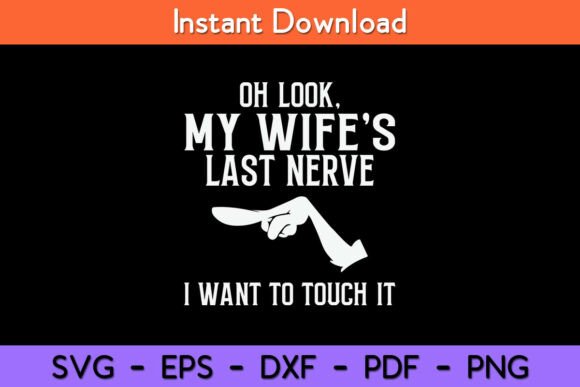
The phrase itself carries a distinct energy. It is self-deprecating, relatable, and slightly edgy, which makes it perfect for the modern craft enthusiast or the small business owner targeting couples with a sense of humor. Visually, the layout of Oh Look My Wife’s Last Nerve I Want to needs to balance legibility with character. In my experience, text-heavy designs often suffer when converted to stitch files if the kerning is too tight or the font weight is inconsistent.
When evaluating this as a potential embroidery project, the shape and flow are crucial. If the text is arranged in a single line, it requires a wide hoop size to prevent the stitches from bunching up at the edges. If it is stacked, the vertical spacing must be generous enough to allow for the natural expansion of the thread during stitching. The visual personality here is casual and conversational, suggesting that the final finished product should feel handcrafted and personal rather than overly corporate or stiff.
Real-World Application: From Screen to Stitch
Let’s imagine a specific scenario: I am preparing a custom embroidered sweatshirt for a client who wants to gift it to their husband for an anniversary. The fabric is a mid-weight cotton fleece, dark charcoal gray. This is where the practical evaluation of Oh Look My Wife’s Last Nerve I Want to begins. On a dark background, the contrast of the thread colors becomes paramount. A simple white outline might get lost if the stitch density is too low, while a heavy fill could make the fabric pucker.
In this context, the design shines as a statement piece for custom apparel. The humor translates well to sweatshirt embroidery because the garment provides a large, flat canvas. However, if I were attempting this on a tote bag design made of thin canvas, the story changes. Thin fabrics require a lighter touch. The running stitch used for outlines in the digital preview might need to be thickened in the actual embroidery file to ensure durability, especially since tote bags are subjected to friction and washing.
Consider also the use of this design for an embroidered patch. Patches offer a controlled environment where you can use a dense backing and a sturdy felt base. Here, Oh Look My Wife’s Last Nerve I Want to could utilize a mix of satin stitch for the lettering and a textured fill stitch for any decorative elements. The result would be a tactile, durable item that holds its shape even after being ironed onto a jacket or backpack. For an Etsy seller, offering this as a patch expands the product line beyond just clothing, appealing to customers who want a versatile accessory.
Navigating Fabric Challenges and Technical Limits
Not every surface is suitable for every design. As a reviewer, I must warn against using Oh Look My Wife’s Last Nerve I Want to on highly textured fabrics like heavy denim or ribbed knits without significant adjustments. The uneven surface can cause the needle to skip or the thread to break, ruining the handmade product. Similarly, stretchy fabrics require a specialized stabilizer to prevent the design from distorting when the garment is worn.
Another critical area is curved surfaces, such as caps. While a short phrase works well on a hat, a longer sentence like this one can become difficult to read if wrapped around the curve of a brimless cap. The perspective shifts, and the text may appear distorted. In these cases, it is often better to place the design on the front panel of a structured hat where the surface is relatively flat. If you are creating holiday embroidery items or wedding gifts, always test the placement on a mockup first to ensure the message remains clear.
Detailed corners and tiny lettering are the enemies of clean embroidery. If the version of Oh Look My Wife’s Last Nerve I Want to you are using includes intricate serifs or very small connecting words, they may not stitch out cleanly. Threads have a physical width, and if the design details are smaller than the thread diameter, they will merge into a blob. Always inspect the digital embroidery file at 100% zoom before committing to a run. Simplifying the font or increasing the point size might be necessary to maintain professional quality.
Practical Designer Notes for Success
To ensure your project succeeds, follow these practical steps when working with this design:
- Test on Scrap Fabric: Never skip the test run. Use a scrap piece of the same fabric you intend to sell or gift. Check for puckering, thread breaks, and alignment issues.
- Check Thread Contrast: Ensure the chosen thread colors pop against the background. For light fabrics, dark threads work best, and vice versa.
- Review Stitch Density: If the design looks too heavy, reduce the density in your software to prevent the fabric from becoming stiff.
- Confirm Hoop Size: Verify that your machine’s hoop size can accommodate the full length of the phrase without needing to re-hoop, which can lead to misalignment.
- Inspect Small Details: Zoom in on the file to check for tiny gaps or overlapping lines that could cause stitching errors.
- Use Proper Stabilizer: Select a stabilizer appropriate for the fabric weight. Cut-away is best for stretchy items, while tear-away works for stable wovens.
- Verify Licensing: Before selling finished items or digital products, confirm the license terms. Many designers restrict commercial use unless a specific license is purchased.
Impact on Brand and Customer Perception
Using a design like Oh Look My Wife’s Last Nerve I Want to can significantly boost buyer engagement if executed correctly. It shows personality and connects with customers on an emotional level. For a craft business, offering unique, humorous designs differentiates you from competitors selling generic patterns. It builds trust because customers see that you understand their sense of humor and the quality of your workmanship.
However, the margin for error is slim. A poorly stitched design with tangled threads or missed letters can damage your reputation instantly. The visual appeal of the finished product directly correlates to customer satisfaction. When the stitching is crisp and the placement is perfect, the item becomes a conversation starter, enhancing the perceived value of your brand.
Ultimately, Oh Look My Wife’s Last Nerve I Want to is a strong candidate for commercial embroidery projects, provided you respect the technical limitations of the medium. Whether you are making a personalized gift for a friend or stocking inventory for your online shop, the key lies in preparation. By treating the embroidery file with the same care you would give to any other aspect of your business, you can turn a funny phrase into a profitable and beloved product. Remember, the best designs are those that survive the transition from digital concept to physical reality without losing their charm.