Born to Go Fishing Forced to Go to: A Designer’s Review
As an embroidery designer who has spent countless hours digitizing and testing files for real-world application, I approach every new machine embroidery design with a critical eye. It is not enough for a graphic to look cute on a screen; it must hold up under the needle, survive the wash, and resonate with the end customer. Recently, I evaluated the Born to Go Fishing Forced to Go to design, a piece that sits at the intersection of humor and hobbyist pride. This review breaks down how this asset performs when moved from a digital concept to a tangible, stitched reality.
First Impressions and Visual Personality
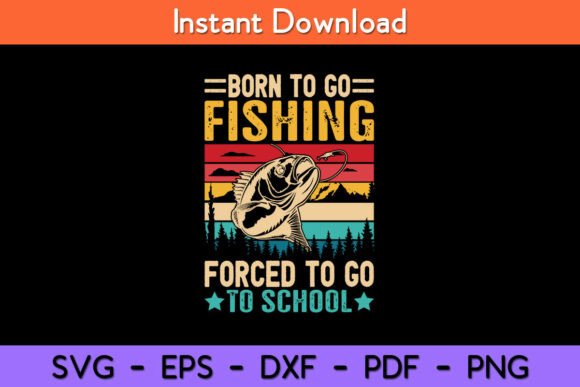
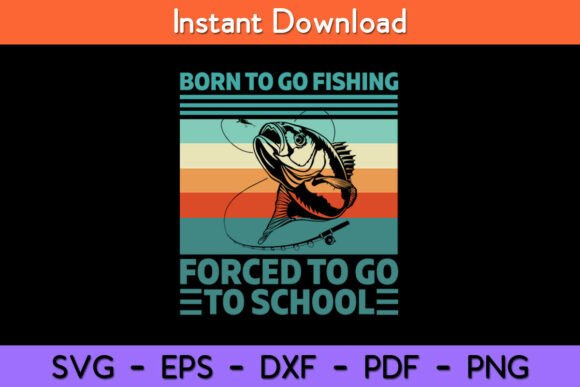
The immediate appeal of Born to Go Fishing Forced to Go to lies in its relatable narrative. The phrase captures a specific mood: the reluctant student or employee who would much rather be casting a line than sitting in a classroom or office. Visually, the layout tends to balance playful typography with thematic iconography. For an embroidery project, this balance is crucial. If the text is too dense, it becomes a blob of thread; if the icons are too intricate, they get lost in the fabric texture.
From a Graphics perspective, the design offers a clean silhouette that translates well into stitch data. The mood is lighthearted and casual, making it an ideal candidate for custom apparel and lifestyle accessories. It does not try to be overly ornate, which is a strength. In embroidery, simplicity often yields higher durability and cleaner finishes, especially when working with varied thread colors and fabric texture combinations.
Real-World Application: The Tote Bag Test
To truly understand the viability of this design, I visualized it on a heavy canvas tote bag—a staple item for any Etsy seller or craft business. The horizontal nature of the phrase fits perfectly across the upper third of a standard tote. When stitching this onto canvas, the rigidity of the fabric supports the text well, preventing puckering. The contrast between bright blue or green threads (evoking water and nature) against a natural beige or dark navy canvas creates a striking visual impact.
This scenario highlights why Born to Go Fishing Forced to Go to works as a personalized gift. It speaks to a specific identity. A father, grandfather, or young angler receiving this bag feels seen. For small shop product lines, this kind of targeted humor drives engagement because it connects emotionally with the buyer. It is not just a bag; it is a statement about priorities.
Versatility Across Product Categories
Beyond tote bags, this design demonstrates significant versatility within the Crafts sector. Consider its application on a youth-sized sweatshirt. The humorous take on school resistance makes it a hit for back-to-school season, provided the sizing is adjusted correctly. On a sweatshirt embroidery project, the design needs to be scaled up slightly to ensure legibility from a distance. The fill areas in the letters should be optimized to avoid stiffness, ensuring the garment remains comfortable for a child to wear all day.
Another strong contender is the embroidered patch. Patches have surged in popularity as a way to customize jackets and bags without committing to permanent stitching on delicate fabrics. The bold lines of Born to Go Fishing Forced to Go to translate excellently into a satin-stitch border with a fill interior. This allows the patch to be ironed or sewn onto denim jackets, fishing vests, or backpacks. For commercial embroidery businesses, offering this as a ready-made patch adds value without requiring complex hoop setups for each individual order.
For home decor, imagine this stitched onto a kitchen towel or a pillow cover for a lakeside cabin. Here, the context shifts from personal apparel to environmental branding. The design reinforces the rustic, outdoor aesthetic that many homeowners seek for vacation properties. It serves as a subtle yet clear nod to the lifestyle enjoyed within those walls.
Technical Considerations and Stitching Challenges
While the design is charming, practical execution requires attention to detail. One must consider stitch density. If the original SVG is converted without proper digitizing adjustments, the text may become too dense, leading to thread breaks or fabric distortion. I recommend using a combination of satin stitch for smaller elements and borders, and a lighter fill stitch for larger letter bodies. This approach maintains clarity while reducing bulk.
Small details pose another challenge. If the design includes tiny fishing rods or fish icons, these must be simplified. Intricate corners can cause bunching, especially on stretchy fabrics like jersey knits used in t-shirts. Always test the design on scrap fabric first. Check how the running stitch underlay performs on different materials. On thin fabric, a cut-away stabilizer is essential to prevent the design from pulling out of shape after washing. On thicker materials like fleece or toweling, a tear-away stabilizer might suffice, but testing is non-negotiable.
Color contrast is also vital. On dark fabrics, light threads pop, but one must ensure the design does not rely on subtle shading that gets lost in the stitch texture. Conversely, on light fabrics, dark threads provide definition. I advise creating black and white mockups to verify that the design’s shape is recognizable even without color. This ensures accessibility and visual clarity for all viewers.
Commercial Viability and Brand Consistency
For digital product sellers and creative entrepreneurs, the value of Born to Go Fishing Forced to Go to extends beyond the stitch. It is a versatile design asset that can be marketed across multiple platforms. Whether sold as a finished handmade product or as part of a broader collection of outdoor-themed items, it contributes to brand consistency. Shops that specialize in humorous, niche-specific gifts will find this design aligns perfectly with their audience’s expectations.
However, before selling, one must verify the licensing terms. Since the source describes it as an SVG for cutting machines, using it for embroidery requires converting the vector paths into stitch data. Ensure you have the right to create derivative works for commercial sale. Many Etsy sellers overlook this step, risking account issues. Always confirm whether the license covers physical finished goods or if it is restricted to personal use only.
Final Verdict for Makers and Designers
In conclusion, Born to Go Fishing Forced to Go to is a strong contender for your next embroidery project. Its strength lies in its emotional resonance and visual simplicity. It performs well on sturdy fabrics like canvas and denim, making it ideal for tote bag design applications and durable custom apparel. While it requires careful attention to stitch density and stabilizer choice to maintain quality on softer or stretchier materials, the effort yields a professional-looking finished product.
For those looking to expand their holiday embroidery or back-to-school collections, this design offers a fresh alternative to generic slogans. It invites conversation, adds personality, and showcases the maker’s ability to blend humor with technical precision. By testing thoroughly and respecting the material constraints, you can transform this digital file into a high-value item that customers will cherish and wear with pride.