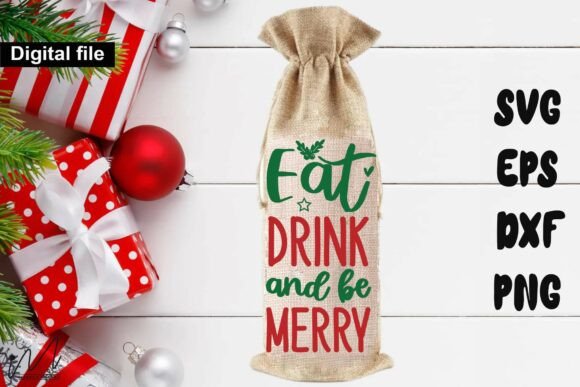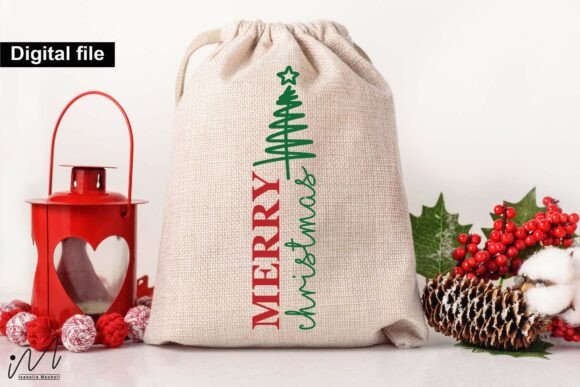
Review: Merry Christmas – Christmas Wine Bag Design
As a designer who has spent countless hours digitizing and testing files for client work, I approach every new machine embroidery design with a mix of curiosity and skepticism. We have all been there: you find a cute graphic online, download it, and then realize halfway through stitching that the density is too high or the details are lost in the fabric texture. That is why I took a close look at Merry Christmas – Christmas Wine Bag to see if it holds up in real-world production environments.
This isn’t just about whether the image looks good on a screen. It is about how it translates into thread, how it behaves on different materials, and whether it adds genuine value to your craft business. Let’s break down what makes this Graphics asset worth your time and where you might need to exercise caution.
First Impressions and Visual Personality
The first thing that strikes me about Merry Christmas – Christmas Wine Bag is its playful tone. In the holiday season, customers often tire of overly traditional or stiff motifs. This design offers a refreshing, funny vibe that feels modern and approachable. For an Etsy seller or small shop owner, this personality is a selling point. It suggests warmth and humor, which are key emotions buyers look for in a personalized gift.
Visually, the layout appears balanced. When evaluating any embroidery file, I look for clear shapes and logical flow. A cluttered design leads to messy stitching, but this one seems to prioritize clarity. The theme is unmistakably festive, yet it avoids the visual noise that often plagues holiday design assets. This simplicity is crucial because it allows the design to scale reasonably well without losing its identity, provided you respect the limits of your machine and hoop.
Real-World Application: Beyond the Screen
Let’s talk about where this design actually lives. I recently worked on a batch of custom holiday gifts for a boutique client, and a design like Merry Christmas – Christmas Wine Bag would have been perfect for their lineup. Imagine this stitched onto a sturdy canvas tote bag design. The contrast of thread against natural cotton creates a rustic, handmade appeal that customers love. It transforms a simple grocery bag into a cherished holiday accessory.
Another strong candidate is sweatshirt embroidery. A crewneck sweatshirt provides a large, stable surface area. Here, the design can breathe. You can use thicker threads to give the stitches more dimension, making the finished product feel premium. However, you must consider the fabric weight. If you are working with a lightweight tee, you will need a robust stabilizer to prevent puckering, especially if the design has any dense areas.
For those in the commercial embroidery space, this could also work as an embroidered patch. Patches are trending, and a funny holiday motif sells well in December. By stitching it out on twill or felt, you create a durable item that can be ironed or sewn onto jackets, hats, or backpacks later. This extends the lifecycle of your embroidery project and opens up additional revenue streams.
Technical Considerations for Stitchers
Now, let’s get into the technical nitty-gritty. Since Merry Christmas – Christmas Wine Bag is provided as a funny svg design for crafts project, including formats like SVG, DXF, EPS, and PNG, we need to address a critical distinction. These are vector and raster image formats, not native embroidery files like PES or DST. This means you cannot simply load them into your embroidery machine.
You will need to use appropriate software to convert these graphics into stitch data. This is both a pro and a con. On the positive side, you have full control over the thread colors, size, and stitch types. You can decide whether to use a satin stitch for smooth borders or a fill stitch for larger areas. You can adjust the stitch density to suit your specific fabric. On the downside, this requires skill. If you are new to digitizing, you must be careful. Poor conversion can lead to thread breaks, bird nests, or distorted shapes.
When converting, pay attention to the hoop size. Ensure your design fits comfortably within your frame with enough margin for the clamp. Also, check the detail level. Tiny elements in the original SVG might become unrecognizable blobs when stitched out. Simplify complex corners and ensure that any text is large enough to be legible after stitching.
Fabric and Placement Challenges
Not every surface is created equal. While this design works well on flat, woven fabrics like cotton or linen, it requires care on textured or stretchy materials. For example, if you are doing baby embroidery on a onesie, the fabric is often thin and stretchy. You must use a cut-away stabilizer and possibly a water-soluble topping to keep the stitches from sinking into the knit.
Curved surfaces like caps present another challenge. If you plan to put Merry Christmas – Christmas Wine Bag on a hat, you need to account for the curvature. The design might distort if it is too wide. Keep the width narrow and test on a scrap piece of similar curved fabric first. Dark fabrics also require thought. If you are stitching on black or navy, ensure your thread colors have enough contrast. A light-colored thread on dark fabric pops, but you may need to adjust the underlay stitches to prevent the background fabric from showing through.
Commercial Viability and Brand Trust
For small shop product creators, consistency is key. Using a well-executed design builds trust. When a customer receives a handmade product that looks professional, they are more likely to return. Merry Christmas – Christmas Wine Bag has the potential to enhance your brand if used correctly. It shows that you pay attention to detail and choose designs that resonate with current trends.
However, always verify the licensing terms. Just because you can change the color and size does not mean you can resell the digital file itself. Typically, these licenses allow you to sell physical finished product items, but not the digital embroidery file or the source graphics. Check the specific license included with your purchase to avoid legal issues. This is crucial for maintaining professionalism in the Crafts community.
Final Verdict and Practical Tips
Before you commit to a large production run, follow these steps:
- Test on scrap fabric: Always stitch a sample on the same material you plan to use for the final item.
- Check contrast: View your design in black and white to ensure the shapes are distinct.
- Review stitch density: If you are converting the SVG yourself, avoid overly dense fills that can cause puckering.
- Confirm hoop size: Make sure the design fits your machine’s capabilities.
- Inspect small details: Zoom in on the converted file to catch any stray stitches or gaps.
In conclusion, Merry Christmas – Christmas Wine Bag is a versatile and charming addition to your holiday toolkit. It bridges the gap between fun and functional, making it ideal for holiday embroidery projects ranging from kitchen towels to custom apparel. With careful preparation and smart digitizing, it can elevate your custom apparel offerings and delight your customers. Just remember that the quality of the final stitch depends largely on your setup and technique. Treat this design as a foundation, and build upon it with your own expertise to create something truly special.