Mess with the Honk You Get the Bonk Svg Review
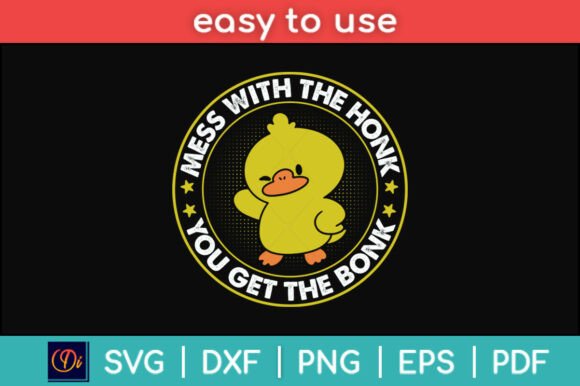
As a designer who has spent years navigating the intersection of digital graphics and physical thread, I approach every new asset with a critical eye. When I first encountered the Mess with the Honk You Get the Bonk Svg, my immediate reaction was a mix of amusement and professional curiosity. The phrase itself is a playful pun centered on a farmer duck theme, promising a lighthearted, humorous vibe that stands out in a sea of generic designs. However, moving from a digital preview to a tangible finished product requires more than just a funny slogan; it demands an understanding of how the design translates through the needle.
This piece falls squarely into the Crafts category as a versatile Graphics file. While the description notes its compatibility with Cricut and Silhouette cutting machines for print-and-cut applications, my focus here is on its potential as a machine embroidery design. For those of us running a craft business or selling on Etsy, the ability to adapt a popular graphic into high-quality stitching can significantly elevate a handmade product line. Let’s dive into how this specific design performs when we move away from vinyl and toward thread.
The Visual Personality and First Impression
The layout of Mess with the Honk You Get the Bonk Svg is inherently bold. The typography is likely chunky and assertive, designed to grab attention instantly. In the context of embroidery, this is both a strength and a challenge. The "Farmer Duck" motif suggests a rustic, farm-to-table aesthetic that pairs beautifully with natural fibers like canvas, denim, or heavy cotton blends. The mood is undeniably fun and slightly rebellious, making it perfect for custom apparel aimed at parents, teachers, or anyone who appreciates barnyard humor.
When visualizing this as an embroidery project, the shape of the letters and the illustration of the duck must be clean enough to hold up under magnification. If the original SVG contains intricate details or extremely thin lines, they may get lost in the stitch density required for a durable garment. A successful conversion relies on simplifying these elements without losing the character of the original digital embroidery file.
Real-World Application: From Hoop to Shelf
Imagine you are preparing a batch of tote bag design items for a local craft fair. You want something that pops against a sturdy beige canvas. The Mess with the Honk You Get the Bonk Svg offers a fantastic opportunity here. The contrast between the earthy tone of the fabric and vibrant thread colors—perhaps a bright yellow for the duck and a deep navy for the text—creates a striking visual appeal. This kind of personalized gift often sells well because it feels unique and carries a conversation-starting message.
Consider another scenario: creating a limited run of sweatshirt embroidery for a boutique shop. The soft texture of fleece works wonders with the fill stitch needed for the larger areas of the duck illustration. However, you must be mindful of the hoop size. If the design spans too wide, you risk distorting the fabric or having the stitches pull unevenly. In this case, breaking the design into two hoops or scaling it down slightly might be necessary to maintain the integrity of the finished product.
For baby embroidery, this design could be adapted for a toddler's bib or a nursery pillow cover, provided the text is simplified for safety and comfort. The playful nature of the phrase fits perfectly with children's wear, but the stitch density must be kept low to prevent irritation against sensitive skin. Here, the running stitch or a lighter satins stitch around the edges would add a delicate touch while keeping the item washable and comfortable.
Navigating Challenges and Fabric Limitations
While the concept is strong, there are specific situations where Mess with the Honk You Get the Bonk Svg requires careful handling. Embroidering on textured fabrics like linen or ribbed knits can be tricky. The uneven surface may cause the needle to skip or the thread to bunch up, especially in areas with tight lettering. Similarly, thin fabric such as lightweight t-shirts needs a robust stabilizer to prevent puckering. Without proper backing, the weight of the thread could warp the garment, ruining the professional look you strive for.
Dark fabric presents another hurdle. If you plan to use this design on black or navy garments, you will need to ensure the digitization includes an underlay layer to make the colors pop. Without it, the threads might blend into the background, diminishing the impact of the "Bonk" message. Additionally, curved surfaces like caps require specialized digitizing techniques. The flat geometry of the SVG might not translate smoothly to a rounded surface without adjusting the stitch angles, which could lead to registration issues.
Be particularly cautious with detailed corners and tiny lettering. In the rush to capture every nuance of the original graphic, small details can become muddy clumps of thread. As an experienced reviewer, I always advise testing the design on scrap fabric first. Check the thread color contrast and review the stitch density before committing to a client order. If the letters are too small, consider removing them or enlarging the entire design to ensure legibility.
Practical Designer Notes for Success
To maximize the value of Mess with the Honk You Get the Bonk Svg in your workflow, start by creating printable mockups in black and white. This helps you visualize the design without the distraction of color, allowing you to spot potential issues with spacing and balance. Compare how the design looks on light versus dark backgrounds to determine the best use cases for your inventory.
Always confirm the licensing terms before using this asset for commercial embroidery. Whether you are selling embroidered patches, holiday gifts, or small shop products, ensuring you have the right to reproduce the design is crucial for protecting your brand reputation. If you plan to sell the digital embroidery file itself, verify that the license permits redistribution.
Finally, remember that the success of any design assets lies in execution. Use the appropriate stabilizer for your chosen fabric, test the design on a sample swatch, and inspect the results under good lighting. By taking these practical steps, you transform a simple SVG into a high-quality, marketable item that builds customer trust and enhances your brand consistency. Whether for a wedding gift, a kitchen towel, or a trendy apron, this design has the potential to be a standout addition to your portfolio if handled with care and expertise.